
A park at the forefront of climate change mitigation
April 17, 2020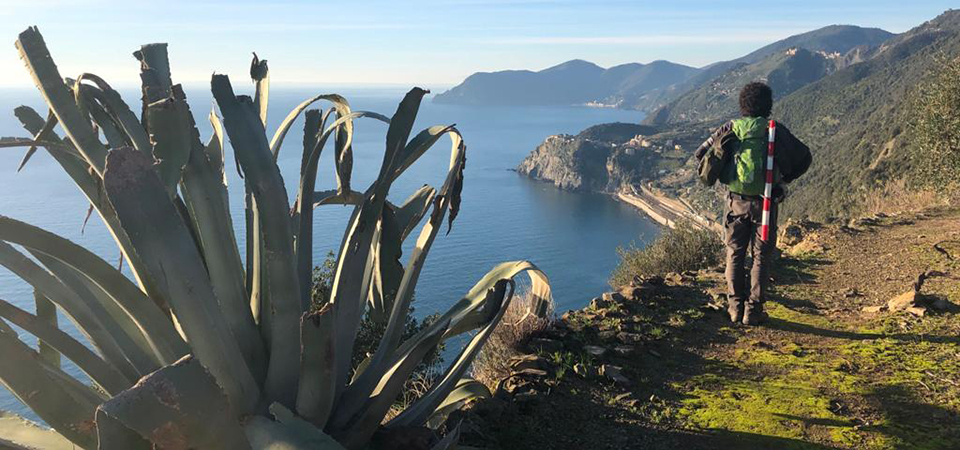
How to make drystone walls resistant to climate change
June 8, 2020
by Ludovica Schiaroli
“Climate change is the real emergency we must face, and we can no longer afford to waste time.”
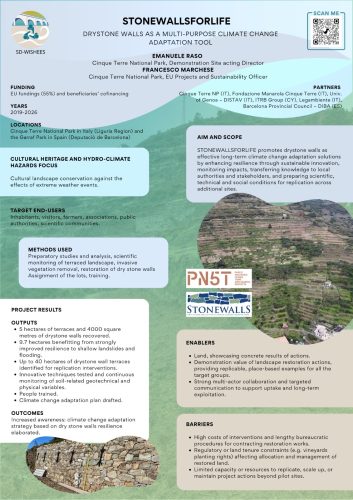
Santo Grammatico is firmly convinced of this. For Legambiente, he oversees the environmental sustainability and communication aspects of the project, highlighting how one of its most innovative features is its ability to bring together multiple dimensions: environment, culture, technology, and solidarity. These four elements alone are enough to summarize a project which, co-financed by the European Union, involves the restoration of six hectares of terraces and 4,000 square meters of dry stone walls in Manarola, in the Cinque Terre. The goal is to improve agricultural production, preserve the landscape, and increase resilience to flooding.
Innovation and ancient knowledge
Grammatico immediately points out the aspects that convinced the environmental association to support the project:
“Stonewallsforlife has the ability to combine scientific and technological innovation with ancestral knowledge, such as the construction of dry stone walls, which has historically enabled people to cultivate the land and live safely in these areas.”
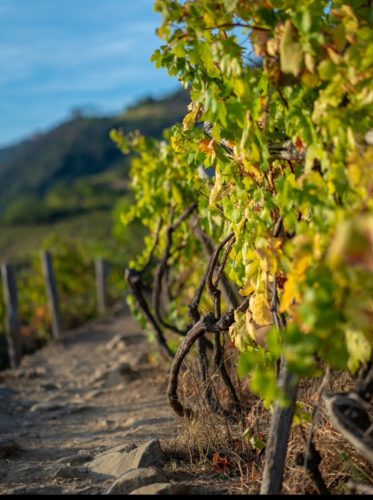
This remains true today. Due to the abandonment of many terraces and the inaccessibility of certain areas, hydrogeological instability is still one of the most pressing issues in the Cinque Terre. The possibility of restoring land for agricultural use, as the project proposes, plays a crucial role.
In this phase, the contribution of researchers from the University of Genoa’s Department of Earth Sciences has proven particularly effective. Through the installation of multiparametric monitoring stations, they are assessing how to improve the structural resistance of the walls that will be restored.
“As Legambiente, I also want to emphasize the social dimension of Stonewallsforlife,” Grammatico adds. “Recognizing the immense cultural value of this landscape is not enough. To preserve it, knowledge must be passed on between generations. The opportunity for migrants, unemployed people, and young farmers to learn this craft and carry forward this tradition is a key element.”
Over the five-year duration of the project (2019–2024), training courses on dry stone wall construction are planned for around forty participants, including unemployed individuals and migrants, who will then be able to find employment locally.
On the front line of climate change mitigation
However, individual projects alone are not enough, Grammatico suggests. It is necessary to intervene at the root by changing the policies and practices of the current development model.
“It is clear that if we do not reduce the use of fossil fuels, which generate high levels of carbon dioxide emissions, we will not be able to limit global warming to 1.5°C by the end of the century, as outlined in the Paris Agreement. The consequences will be severe.”
“This will create major imbalances,” he explains, “because we are talking about average temperatures, meaning some areas will be hit much harder than others. In such cases, adaptation and mitigation actions alone will not be sufficient. This is already happening, for example, in some Pacific islands, where rising sea levels have forced populations to abandon their homes.”
Legambiente has long been engaged in policies aimed at tackling the climate emergency, promoting renewable energy and campaigning against fossil fuels. It operates at both national and international levels, working alongside other organizations to ensure that climate change remains central to the political agenda.
“In recent months, we launched the ‘Change Climate Change’ campaign,” Grammatico explains, “with the aim of raising awareness among citizens and institutions about the effects of climate change, encouraging them to take concrete action.”
Grammatico is applying this experience in environmental activism to the communication of the project, engaging associations, stakeholders, and local communities.
Don’t call them “small walls”
“This is not a minor issue—these are not ‘small walls’,” Grammatico concludes. “They are walls, and walking among these terraces makes that very clear.”
Dry stone walls are the backbone of this fragile yet resilient territory.
“Over more than a thousand years, human activity has shaped the landscape, creating thousands of kilometers of dry stone walls. This is an ancient and precious heritage that, thanks to Stonewallsforlife, we will be able to preserve, reaffirming its central role in the local economy and culture.”
The project’s outcomes will be summarized in a Climate Adaptation Plan, which will help identify and evaluate the most effective actions to be implemented and replicated in response to climate change—not only in the Cinque Terre National Park but also in the Parc del Garraf, in the province of Barcelona.
The plan may then be adopted by local authorities.